


I awoke at four this morning, utterly unable to get back to sleep, because I couldn’t stop thinking about book two. I succumbed to the vertical hegemony at four-thirty and slid from bedroom to sofa, where my iPad waited. I opened up the note on book two and started writing.
interview other couples, both in Japan and beyond, who needed to forge a path to marriage
read the essay on Techno-Orientalism (and the essay on Orientalism, too)
read Tagame’s book on envisioned queer futures for Japan
write more about twentieth-century homophobia in Japan, including the impact of the CIA and the Unification Church
how Russia’s capture of Japanese territory at the end of WWII accelerated Japan’s surrender (the Americans would let them keep the Emperor)
how so-called theories of Japaneseness fostered and continue to foster xenophobia (and homophobia)
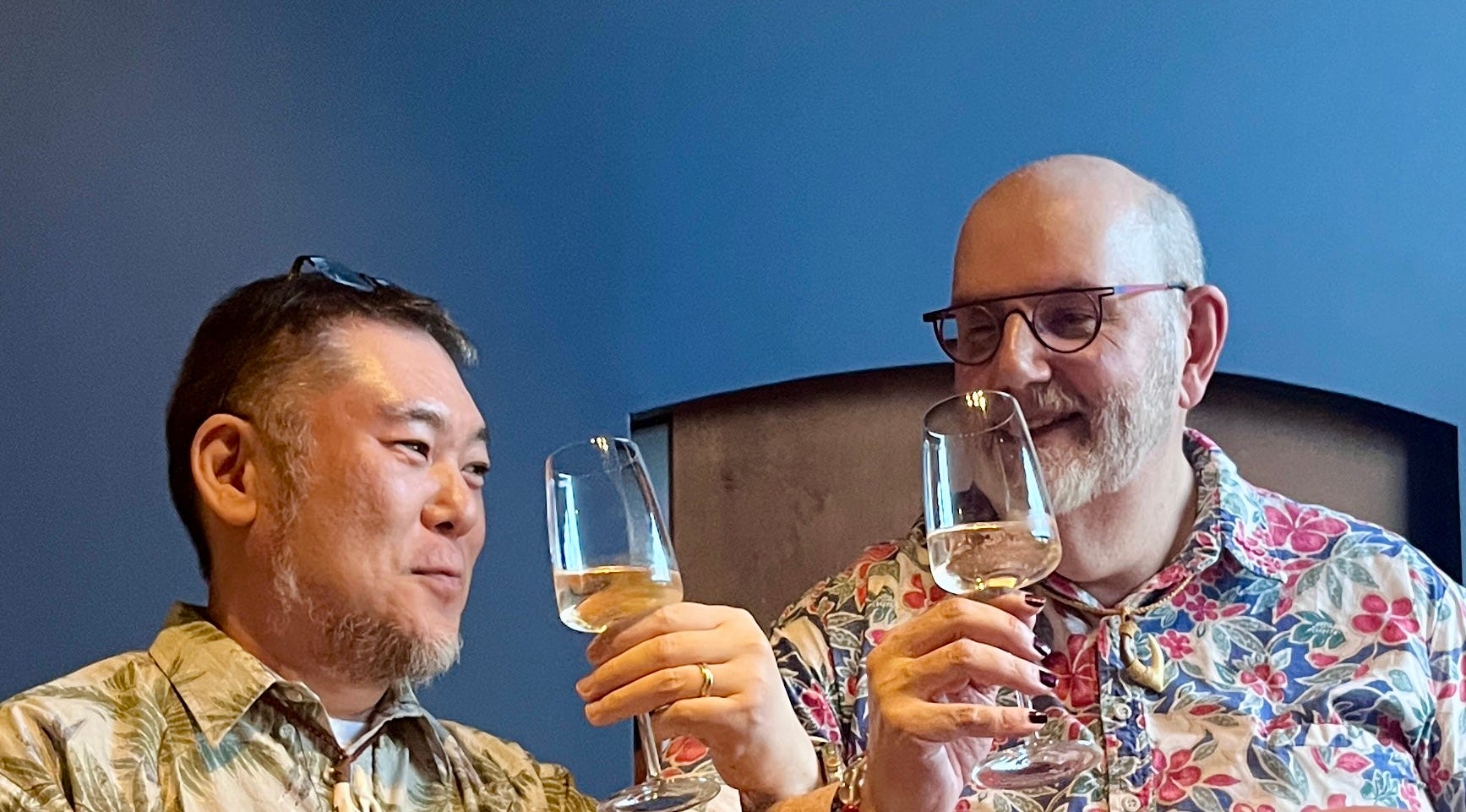
It’s a wild addition of ideas to an already wild list for a book that, nine days ago, was only going to be a narrative where my relationship with Hiro, leading to our marriage, could highlight the marriage equality movements in the US and Japan.
Other notes include:
The need to be fluent in heteronormativity.
How my thinking about WWII evolved after a) visiting Hiroshima, b) sitting with Hiro’s thoughts, and c) watching both Barefoot Gen and Grave of the Fireflies.
how to measure fluency in foreign languages—telling jokes? dreaming?
the evolution of queer pop stars in Japan from the closeted 1980s outward
think more about fetishization; how did Japanese gay men perceive me? what factored into attractiveness for me (beyond deep voices, broad shoulders, and thicc thighs)
It’s a good thing I can handle a braided, lyrical memoir.
I’ve been to other writing events before and came back feeling energized and inspired. And, but, also Lambda Literary’s retreat is entirely different. In a small group of nonfiction writers led by the supportive and insightful Anaïs Duplan, I felt freer in my writing than I ever had before.
For one thing, all the impulses to censor or tone down either my writing or my queerness vanished; I murdered both the cop and the priest in my head. During five intense workshop sessions (not counting the craft talks and readings that also filled the retreat’s schedule), I could read work from the other fellows (there has got to be a more inclusive word for fellowship) in my cohort. Their work was redolent with tenderness, intelligence, and curiosity.
We talked about ekphrasis, autopoiesis, omphaloskepsis. We talked about Polly Pockets, Barbies, and boy bands. We talked about phenomenology and phantom phalluses. We talked about (Catholic) trauma and recovery.
And then, gentle reader, I confess to a moment of searing, painful death.
When my piece was workshopped, someone said they had to look up what a modem was.
This queen is old.
But…
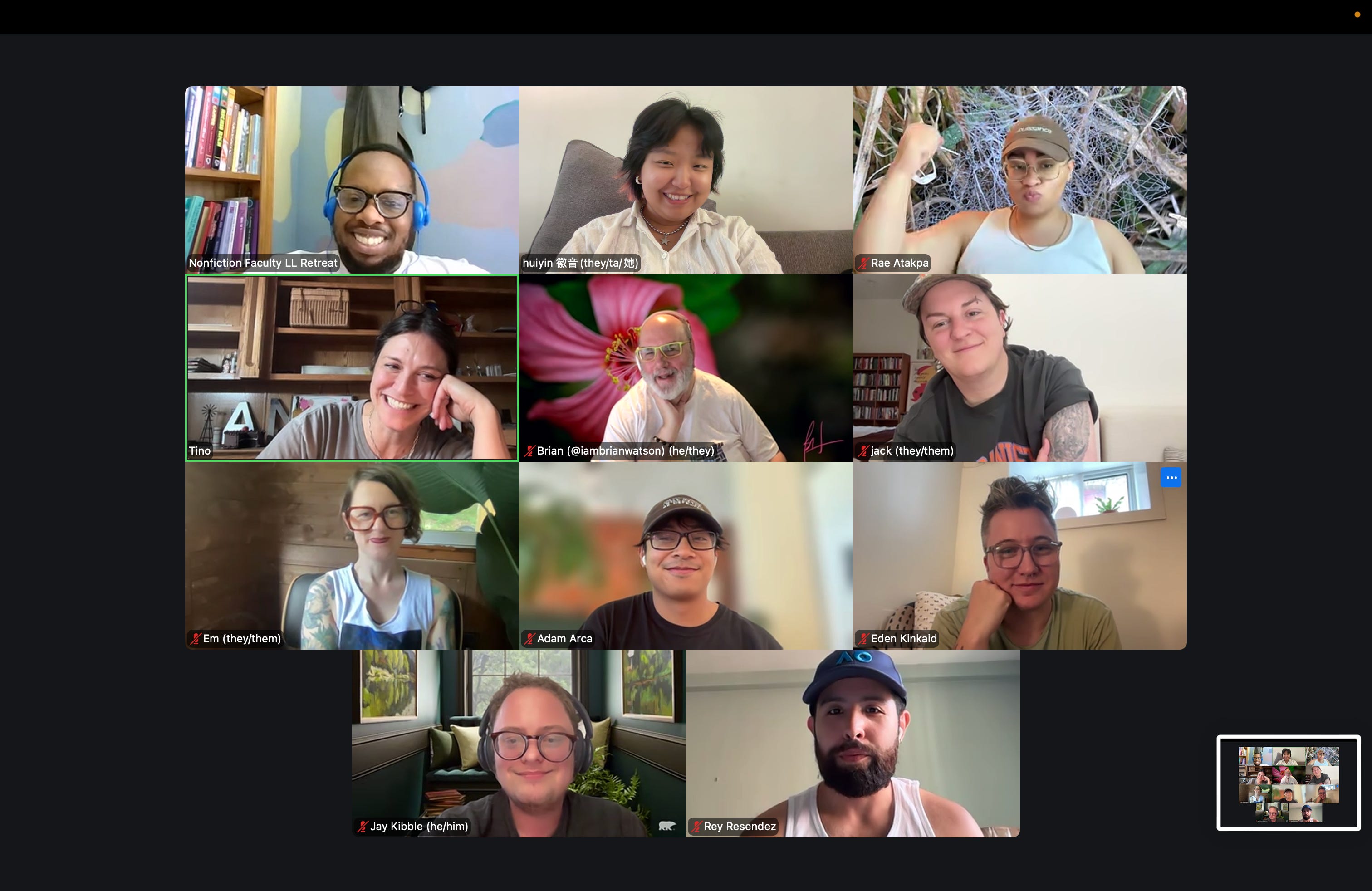
It occurred to me that modems are, by definition, code-switching devices, and my cohort agreed. Modems are inherently queer, navigating the digital and the analog as perfectly as queer people navigate lives both on and off the rainbow. Which is why the title for book two that has been bouncing around in my head is My Life as a Modem: Code-switching My Way to Transnational Marriage Equality. Navigating a heteronormative world in search of authentic queerness. And now I have ten amazing writers to share ideas with, to plan future retreats with, and, most importantly, to heap love on.
This is queer joy.
This.
I recently read something about the US dropping the bombs on Japan. How unnecessary that was, militarily. How morally reprehensible most of the five-star generals viewed it. Might’ve been by Rebecca Solnit.
The title for book 2 is excellent! So glad your retreat was inspiring.