

Saying No
to other people's "wisdom"

Two things to know about me: I like projects and I like goals.
Projects abound for me. There are the many projects that are part of my full-time job as an analyst (not to be confused with psychoanalysis, which I am manifestly not qualified to do).

When I have free time, I write. One of my pieces, an earlier version of my memoir’s first chapter, was recently included in the 2025 issue of Stone Canoe. There’s no information online, but when my copy arrives in the mail, I’ll share some photographs. I did attend a Stone Canoe reading last week, via Zoom, and was honored to read a few minutes of text from that chapter.
But I can’t write all the time. My brain gets bored, even when I’m doing something I love. I have to find other projects, other creative outlets to tickle that fancy.
I review nonfiction for Hippocampus Magazine.
I design bracelets, mostly for myself.
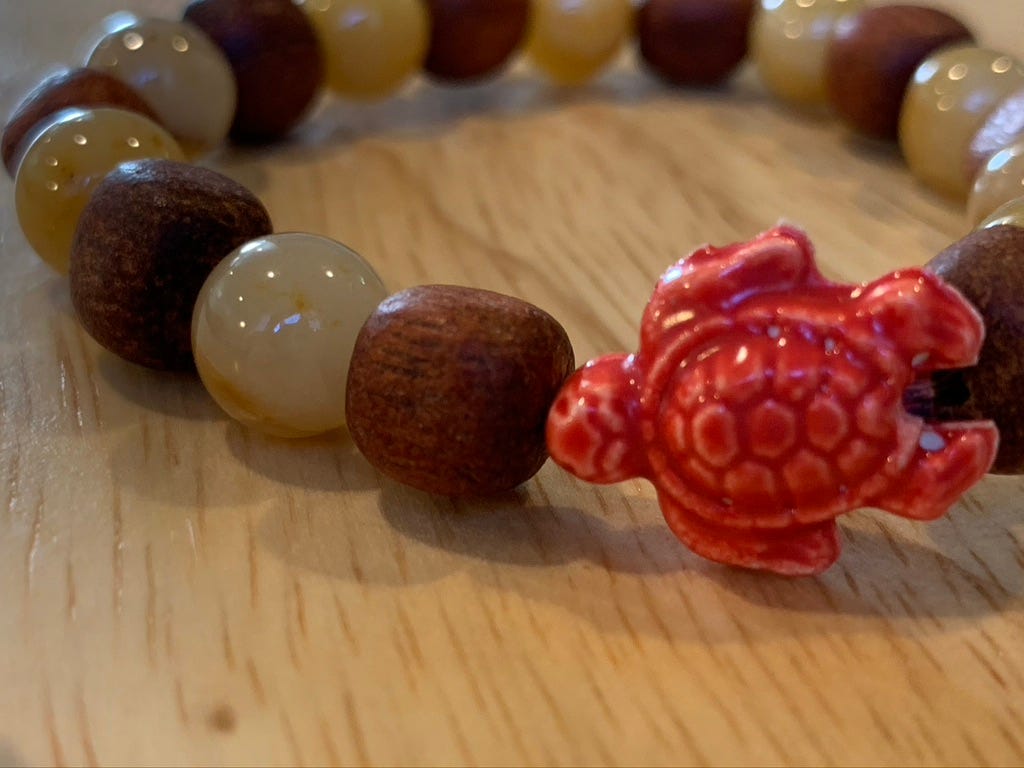
I design T-shirts.

I teach myself a new four-character Japanese aphorism every day. Today’s is 優柔不断 (yūjūfudan) and refers to that state when you are unable to make a decision. When you are trapped in analysis paralysis, as a friend taught me to say. (I don’t believe I suffer from 優柔不断; if anything, I sometimes make decisions a little too quickly.)
And I journal every morning.
At the end of 2024, I bought a Japanese journal book, the ほぼ日手帳 (hobonichi techō, the nearly-every-day journal). I like the title. It offers me grace for the days I forget to write in it. The format also appeals to me. Atop each day’s page are six data: The (numeric) month, the date, the day of the week (in abbreviated Japanese and English), the moon phase, and the day of the year. October 25th, for example, is the 298th day of 2025. The last datum is the date on the old lunar calendar, the dates of which are sometimes observed by Japanese people for important rituals.
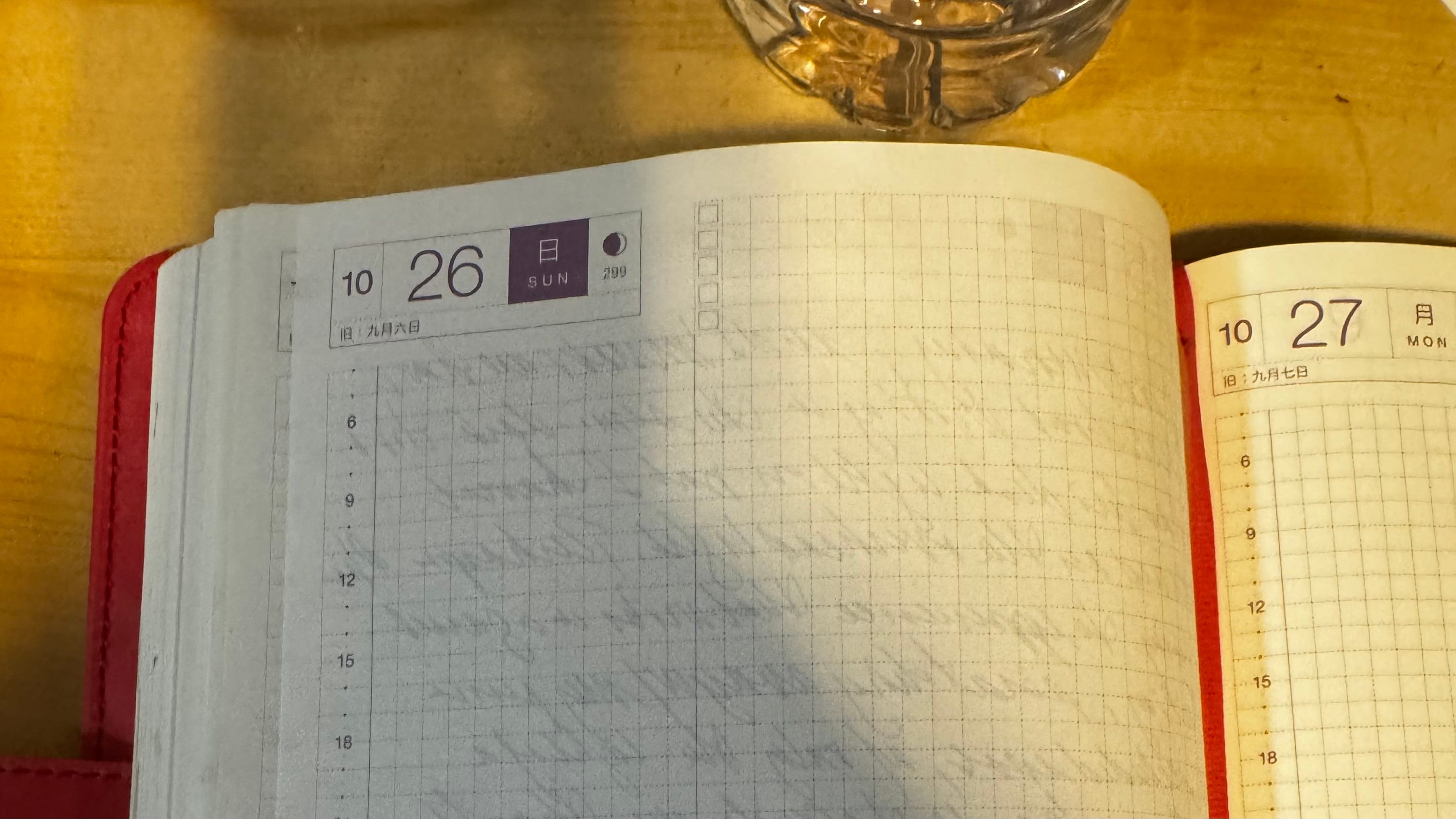
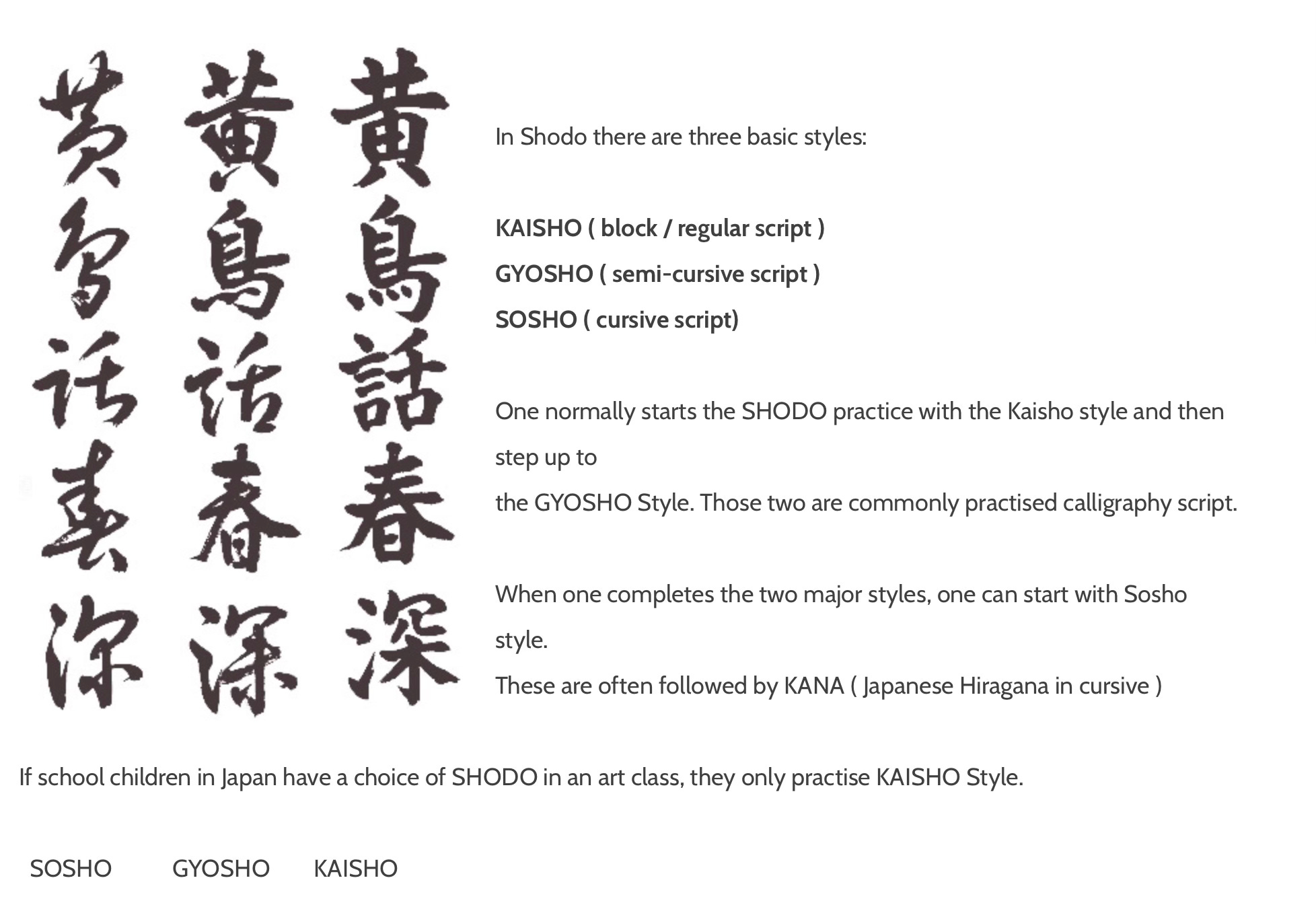
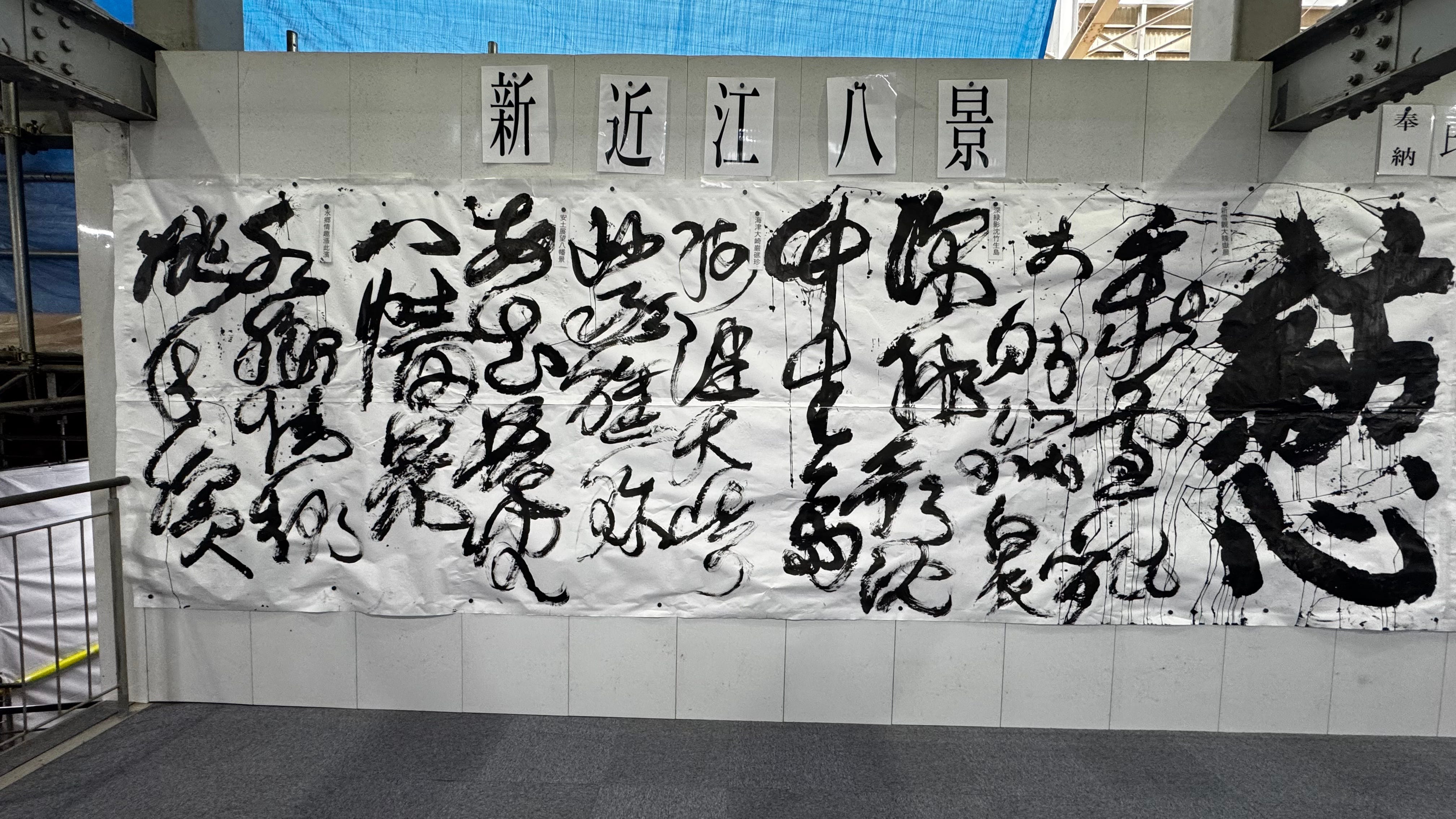
The vast majority of the page’s real estate is given over to a grid for easy writing. I don’t write in Japanese—I’d spend too much time looking up how to write the characters I know, but don’t remember how to write because computers have spoiled me from retaining that knowledge. And I like my English script, too. My Japanese handwriting also shows the evidence of my calligraphy lessons in Japan (or perhaps my impatient nature) and is closer to 行書 (gyōsho), the semi-cursive script, than the more formal, clearer handwriting, 楷書 (kaisho).
At the bottom of each page is a brief nugget of quoted wisdom (in Japanese). Sometimes they are funny, sometimes they are Zen with a simple profundity.
About a week ago, I decided to expand on my journaling and began translating that wisdom to my Substack notes. When I arrived at this morning’s nugget, however, I recoiled. I kept my promise and met my goal, translating it to my notes, but as I did so, I felt a personal negation. This is not wisdom I can embody.
”I think one of the most important mindsets for reaching an ultimate happiness is that of wanting to be loved, and wanting happiness to arise from that love.” Nami Kishida, writer, essayist (my translation)
I understand Kishida’s thought process. It is very much in line with the teaching of Dr. Takeo Doi, one of Japan’s most influential psychiatrists, and the author of The Anatomy of Dependence. (I’d offer a link, but my copy of the 1971 book was the one I used in college and is long out of print.) The brief précis is: a core aspect of Japanese psychological identity is a concept Dr. Doi identifies as 甘え (amae), a tendency to mutually depend on others for a shared happiness. Those who wish to receive 甘え from others engage in a practice Dr. Doi calls 可愛がってもらう (kawaigatte morau), to receive endearment. What I found most fascinating is the etymology. A close cognate to 甘え is the adjective meaning sweet, 甘い (amai), and within the verb 可愛がる (kawaigaru), to endear oneself, is 可愛, characters that literally mean lovable and are most often seen in the adjective 可愛い (kawaii), meaning cute or adorable.
I lived (and live) through good and bad examples of that dependence, that wanting to be loved, that wanting to receive endearment, that wanting to be lovable. My husband and I have refined our interdependence over the past thirty-two years to the point where we both know what the other needs from our relationship (and therefore meet those needs). That is 甘え at its best.
But we did not enter the relationship with a dependence mindset. For me, it was nearly the opposite mindset. Before I met Hiro, I was desperate to be loved and desperate for that concurrent happiness. That want, desire, desperation, however, did not work in my favor. My ex took advantage of my desperation and manipulated me all through our too-long year together. On the days when I’m willing to give him the benefit of the doubt, I can assume his manipulations grew from his need to 可愛がってもらう, to receive endearment. His body language certainly communicated that. The lowered eyes behind his bangs. The sloped shoulders. But then I remember why he employed that need for endearment. To live with me rent-free. To claim that our emotional love was far more important than physical love. At age twenty-five, I worked so hard to convince myself that he was right, that I should offer him 甘え. Until the day I couldn’t do that anymore. Until the day the kindest person I ever knew (before meeting Hiro) snapped me out of that trance.
After my ex, my ongoing need for a relationship provided me with great friends, but no lovers. At the same time, I was stuck in a teenage mindset, thinking that sex was the best entry point for a relationship. I’m not going to judge myself for what I didn’t know, however. I had a lot of great sex during my first five years in Japan, and now that I’m older, it’s reassuring (and self-affirming—I used to be hot!) to have that trove of memories.
But I didn’t see myself. I didn’t realize the unrealistic expectations that my wanting-to-be-loved had created. My 甘え was hopelessly mingled with 交尾 (kōbi, an old-fashioned word for sex that literally means the mingling of tails).
When a friend, bored with my pattern of a) falling in love after a first date that was really just a hook-up, and b) wondering why, oh why, did that new lothario not call back, that friend offered a dictum: STOP!
When I met Hiro four months after an end to my hook-ups, after a celibacy-enhanced mental reset, I wanted nothing. That first date with Hiro wasn’t even meant to be a date. It was a group outing to which only the two of us showed up. Then, and only then, could I admit to Kishida’s truth, because by the time that date was over, I finally knew, for the first time in my life, that I had fallen in love.
But for every day before that date, I would have believed Kishida’s assertion to be toxic. And I still think that wanting to be loved is not the best way to find a relationship, based on my experience.
I’m curious, though. What does ultimate happiness mean to you? Is there a mindset that has helped you achieve such a happiness?

I enjoyed your essay's mix of academic-cultural-personal here, Brian. Writing about my own negative experience with 甘え here would take up too much space, but I can confidently say that my Tokyo-born mother took the complete opposite tack from 甘え with me LoL. She became an American citizen when she married my Anglo dad in the 1950s, converted to Catholicism with him, and raised seven children without a maternal bone in her body. I don't blame her--not only was she saddled with too many children, but expectations weighed heavily and opportunities outside the household were few for women of her era. See!--this comment gotten too long already,