One of the accounts I follow on social media referred today to Yukio Mishima as a gay icon.
First of all, it’s a good thing that Mishima’s widow has died; she was exceedingly litigious and sued anyone who insinuated that the queer Mishima was indeed queer.
But the Widow Mishima is not the reason I took issue with Mishima being awarded gay icon status. Some authors will say, as some authors said of Gore Vidal, that Mishima’s eccentric sexual kinks should preclude him from icon status. Not I. It matters little to me how Mishima got his rocks off.
What makes me revile Mishima, the man (as opposed to Mishima, the author), was his right-wing nationalism, demanding that Japan return to its military might and emperor worship, a demand whose failure to earn sympathetic audiences prompted Mishima’s ritual suicide in 1971.
I could wax snarky and suggest that a real gay icon would have led a successful coup, but knowing the history of nationalism’s treatment of queer people lends more than sufficient contempt for any queerdo who wanders that far right. Scott Bessent, Peter Thiel, I’m thinking of you assholes, too.
HOWEVER…
Not more than fifteen minutes after reading said social media errant canonization did my husband run upstairs with news he knew I’d want to be in on.
Legendary actor, chanteur, voice actor, composer, drag queen, and muse to Mishima, Akihiro Miwa, had died at age 91, of old age.
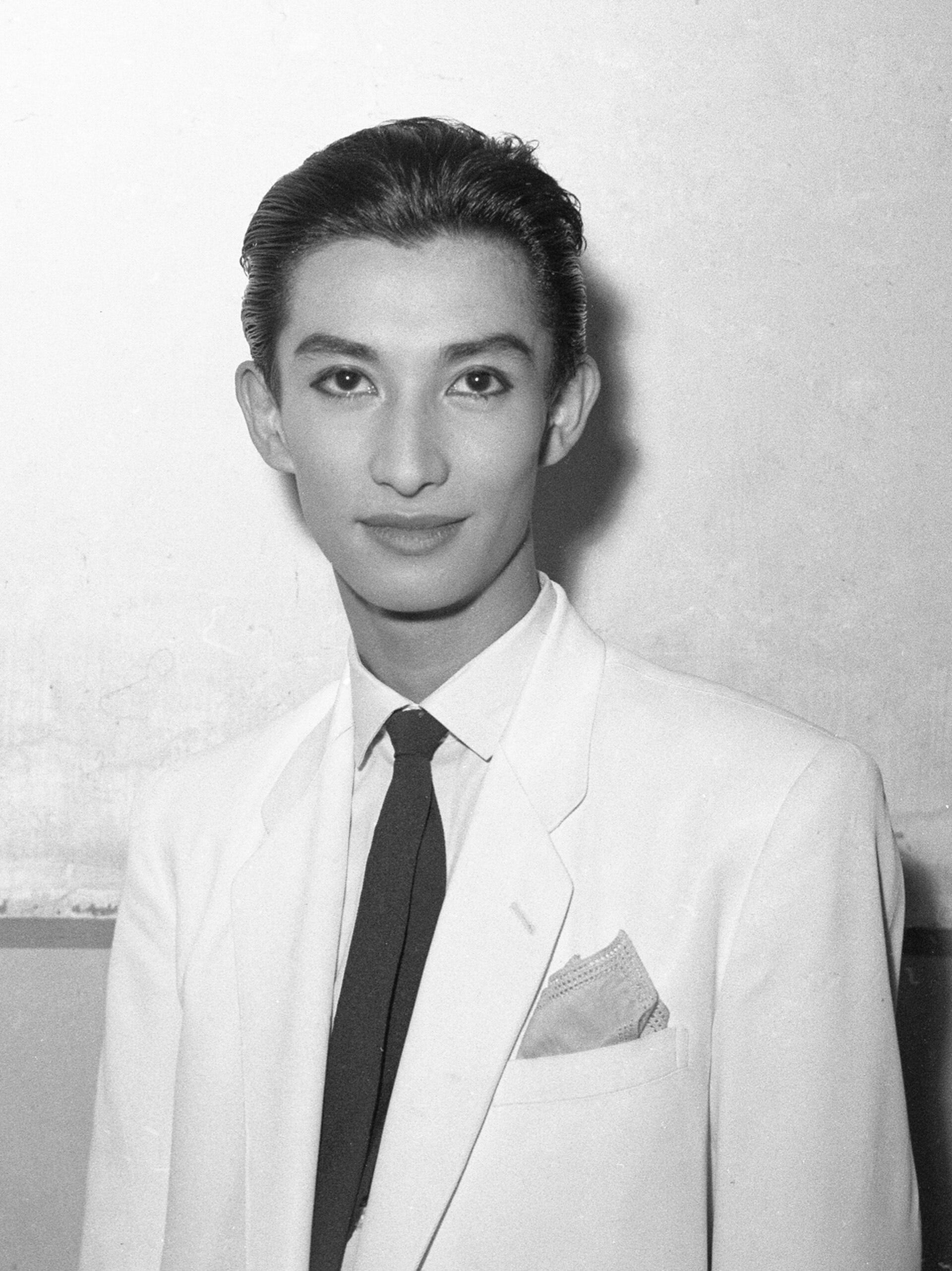
Born in 1935 in Nagasaki as Shingo Terada, at some point in his childhood he was adopted into his mother’s family to become a full heir. His family name changed, then, to Maruyama. When he arrived in Tōkyō in 1952 to pursue an acting and singing career—his first performances were at cabaret bars in Ginza singing Edith Piaf covers—an acting coach suggested that “Shingo” wouldn’t work well as an actor’s name, and suggested Akihiro.
And then, in 1971, as he read out Buddhist sutras during a memorial service for his friend and (former) lover, Yukio Mishima, Akihiro said he received a divine inspiration to change his family name to Miwa, a shrine where Mishima was known to have done some of his body building training. (Mishima was self-conscious about his frail composition and took to body building to project a more manly image—hello, internalized homophobia?).
There are those who know Miwa from his voice acting. He had significant roles in Studio Ghibli’s Princess Mononoke and Howl’s Moving Castle, but my first exposure to the legend that was Akihiro Miwa came during my decade in Japan. At New Year’s, Japan’s public television channel, NHK, produced (and still does) an hours-long song fest called 紅白歌合戦 (kōhaku uta gassen, The Red & White Song Battle), comprising two teams (Red and White) battling it out for ultimate song prowess recognition.
Miwa always had a star turn, appearing in sumptuous drag and performing a Piaf cover (like this stunning rendition of Hymne à l’Amour.
Eat your heart out, Celine Dion.
But wait, I hear you say. What was all that about Miwa and Mishima?
They both migrated to Tōkyō during the early 1950s. Did they run into each other in what were then the metropolis’ most frequently visited cruising grounds, where gay Japanese men could make some quick cash from gay American GIs eager for sexual relief? Places like Shiba Park, Hibiya Park, and the much larger Gaien Park near MacArthur’s headquarters?
Perhaps Mishima saw Miwa perform at a cabaret in Ginza? Without a doubt, though, Mishima would have heard of Miwa after his smash hit song, Me-Que Me-Que, came out in 1957. That song is incredible, concocted, it seems, as a dare to see how many profanities Miwa could get away with singing in his Japanese translation of Aznavour’s lyrics.
The artistic worlds of Mishima and Miwa overlapped during the 1960s. Mishima adapted Rampo Edogawa’s Black Lizard for the stage, and when it was produced as a film in 1968 (a film that Miwa composed the music for), Miwa took on the title role, an elegant jewel thief. Mishima wrote himself into the film, too, performing as, I kid you not, an embalmed corpse.
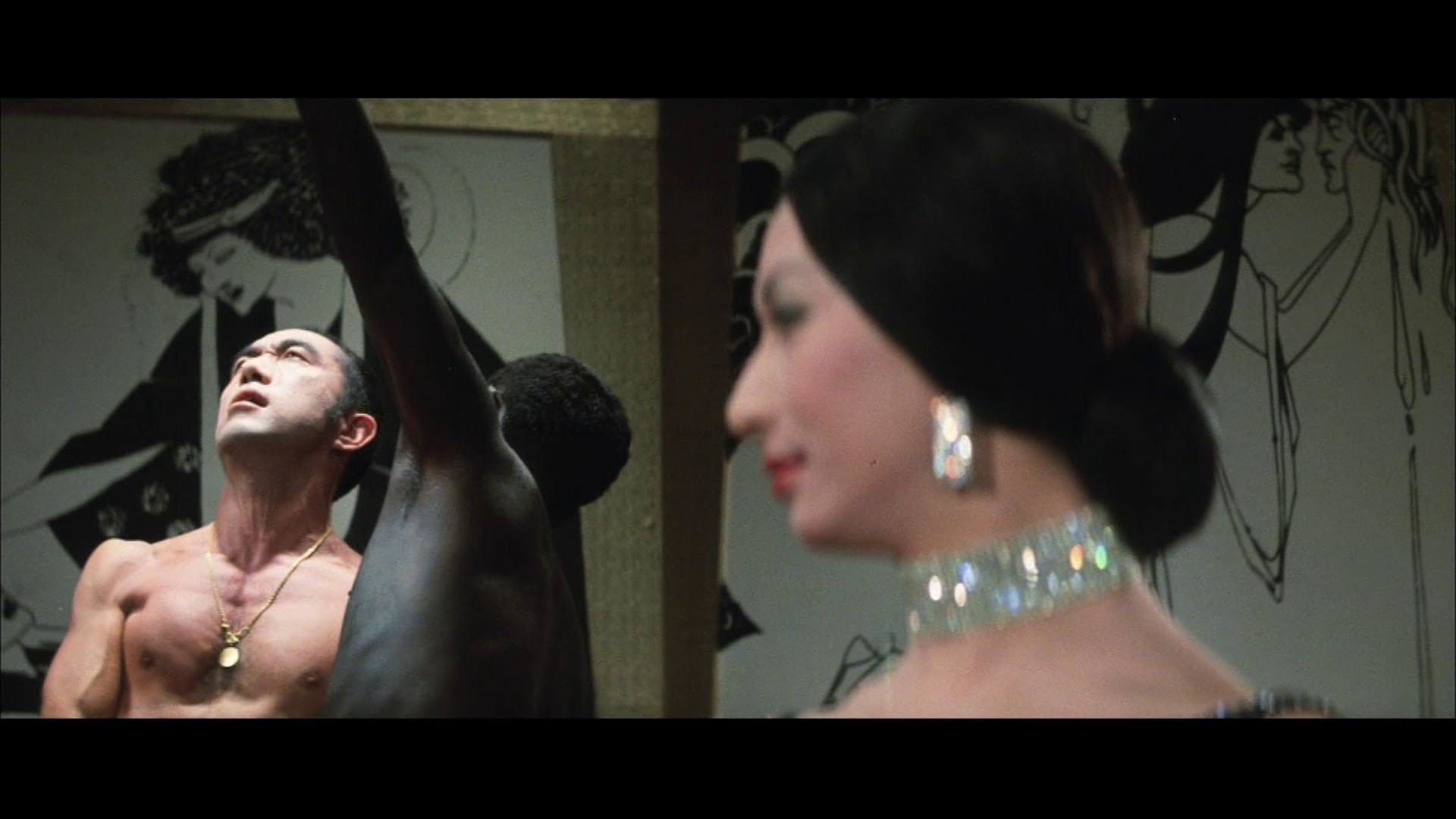
I’ve heard the rumors (rumors the Widow Mishima never could quash) that Mishima and Miwa were lovers at one point. Did Mishima ask Miwa to dominate him, to engage in the sado-masochism Mishima purportedly relished? Perhaps, but I suspect their differing politics quickly became a source of contention. As beautiful and as fascinating Miwa always was, growing up in Nagasaki during the war left him with a strong anti-militarism bent. The antithesis of Mishima’s stance during the last years of his life.
Regardless, Akihiro Miwa was, and remains, a personal hero. Queer, out, and proud. Now that’s an icon!
Let me leave you with one final song. His androgynous elegance is at its peak here.