

Ordinary
finding equilibrium amid the highs and lows of culture shock

From the time I arrived in Japan in 1988 until my first date with Hiro there, in 1993, 1,940 days had passed. Five years and nearly four months of living in Tōkyō’s suburbs, nearly all (save the first three months) were spent living on my own in a family-sized apartment in Okegawa, a small city roughly forty minutes by train from urban centers like Ueno and Shinjuku.
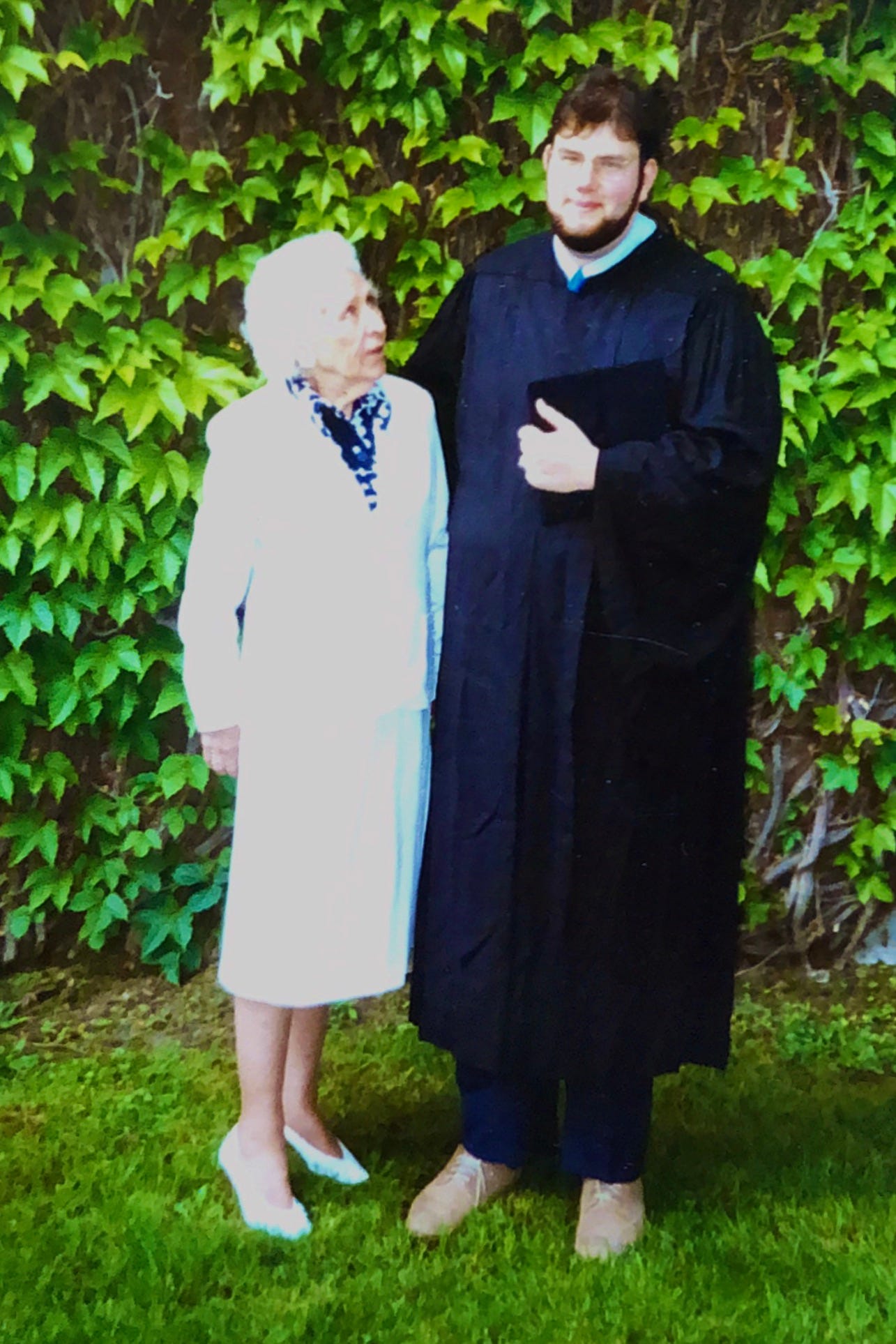
I wasn’t a stranger to culture shock. My 1984 choice of a small college in the northwest corner of Massachusetts brought on, in retrospect, unexpected acclimations. I grew up poor in comparison to most of my freshman classmates, and if that wasn’t enough to make me insecure about my differences, I was also, at least on paper, in the closet for three-quarters of time at college.
My high school just north of (and across the Hudson from) New York City had been tiny. I graduated that school amid a class of seven seniors. And so in addition to dormitory life (communal showers—yikes, said the closet case), I experienced multiple aspects of academia that might have been old hat for my new classmates: organized athletics, a theater department, separate building for all of the sciences, a massive library with carrels you could sleep in, dining halls with salad bars, a (brand-spanking-new) computer center (in a Pepto-Bismol-pink building), and a different climate to boot! In between the silence of winter and the fluster of spring came a schlorp called mud season.
Looking back, I think I experienced the highs (making new friends and joining different extracurricular groups like the Mucho Macho Moo-Cow Marching Band, the Choral Society, and an improv theatre group called Combo ‘Za) and lows (envy of my wealthier classmates and the isolation of my closet) of culture shock at a rapidly cycling pace, changing from day to day or even from hour to hour.
But I I wasn’t aware enough or schooled enough to label those cycling emotions as culture shock. After all, I was in the same United States. Heck, the same northeast corner of the country. Japan would give me my first real taste of culture shock, surely, twenty-two-year-old Brian assumed.
But my assumptions about culture shock were, once again, wrong.
First, I thought I would have it easier because I arrived in Japan speaking nearly fluent Japanese. (Years later, Hiro’s mother told me that, when I called her home to speak with Hiro—and used a Japanese name to keep Hiro’s father off the scent—she had an inkling I wasn’t from Tōkyō, but she guessed I was from Kyūshū. High praise, in retrospect, although I don’t think I sound particularly like Kyūshū speakers of Japanese.)
I also thought that once I had my own apartment and the trauma of home stays were behind me, that culture shock would also fade into non-existence. That culture shock was a one-and-done experience.
Wrong.
As was true in college, culture shock in Japan was on a cycle, although the highs and lows lasted for longer periods of time, months, not days, and weeks, not hours. The highs were incredible. I loved (and still love) everything that Japan was teaching me, from the written language (and calligraphy, which I studied while teaching English) to the art to the religion to the architecture to the food.
But the lows mocked my independence and education. I had to remain in the closet in Japan or risk losing my job. Never mind that I fitted that closet with a revolving doors for very gay weekends in Tōkyō. Code-switching and pretending to have a girlfriend back in America wore me down. Being treated as a one-and-done experience (touché) by many (many) Japanese gay men depressed the heck out of me. They checked me off their list: white guy? Task complete!
And there were aspects of Japanese culture that drove me up the wall. Remaining at work for the sake of appearances, even when there was no work left to do, infuriated me. Hearing supervisors and managers use trite excuses (like 仕方がない shikata ga nai—there’s nothing to be done) to explain negative responses to my questions or to downplay my observations. Even things like the small of bad Japanese cigarettes or the need to vent my apartment when using the kerosene heater in winter or the people who mistook me (when I grew my hair into a ponytail) for a pro wrestler and asked for photographs…
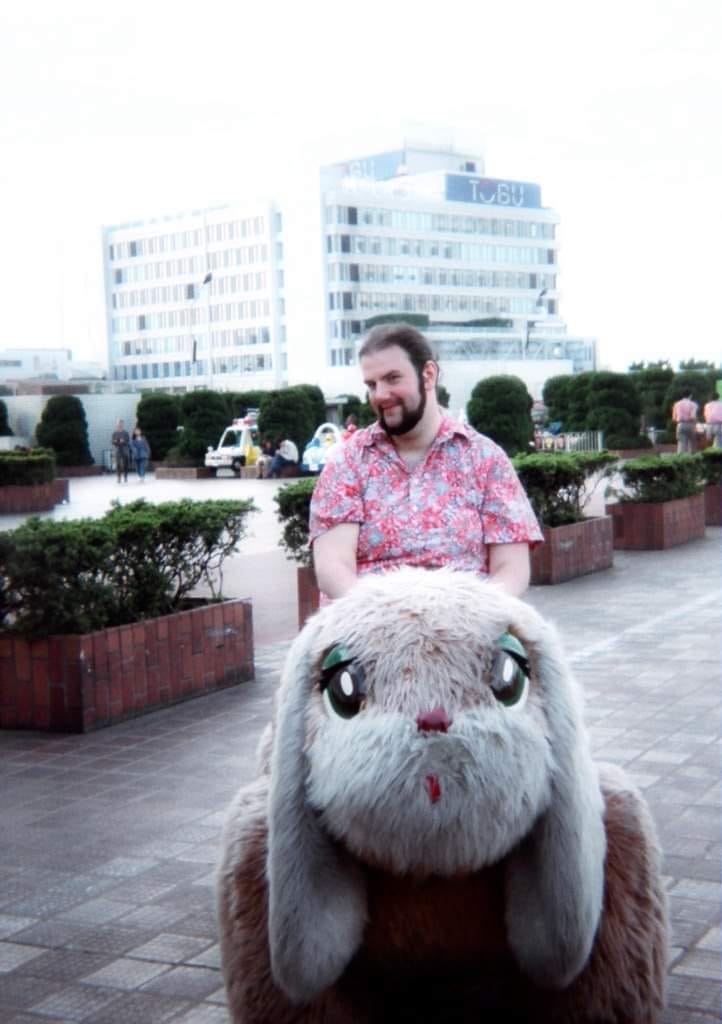
But as time went by, in between those peaks and valleys came longer and longer stretches of the ordinary. The times where I felt at home. When I amazed my friends with my language ability or my navigational skills (I knew certain parts of Tōkyō really well and had a photographic memory for maps). When the men who ran the bars not only remembered my name, they named cocktails after me (one was a concoction of orange juice and Peach Scnapps—my nickname was Momotarō, Peach Boy) and had my favorite movies (Shirley Valentine was at the top of my list in 1991) ready to go in the laser disc player.
Meeting Hiro in 1993 smoothed those culture shock cycles out. Within the first six months, I moved from the suburbs into the city proper, to the northwest corner of Shinjuku Ward. New challenges arose (I had two long hospital stays, one for mononucleosis—not from kissing strangers!—and one for lower back problems), and although Hiro didn’t officially move in to my Shinjuku apartment, he was more often with me than not.
Was culture shock done with me? No.
In 1998 a company in Washington State paid to relocate me to the US (and offered to cover Hiro’s insurance expenses if he joined me there). It took him about ten months to settle his student visa requirements, but from the moment I stepped off the Northwest flight to SeaTac, I knew culture shock was going to hit me hard.
Seattle is at a much higher latitude than Tōkyō, and I touched down in January, shortly after the solstice. After immigration and customs, I met the headhunter who led me to the curb outside the terminal so he could grab his car and shuttle me to Kirkland. It was coming up on seven in the morning and it was still dark outside! I’m just about two years shy of the thirtieth anniversary of that relocation and I can tell you: I am not yet acclimated to winter in the Pacific Northwest and it’s Big Dark.
And then there’s the attitudinal shock.
I didn’t grow up in Manhattan, but spent enough time in New York City as a teenager to take on the brash yet private attitude of city people. In a city as crowded as New York, people take personal space very seriously. The same was true in Tōkyō. We don’t talk to strangers and we barely acknowledge strangers if they try to talk to us. I don’t know you. Leave me alone.
On my very first day in Kirkland, across the lake from Seattle, and after dropping my luggage at the La Quinta down the street from my new office, my headhunter started in on his priorities. I must have been too jet lagged during the dim sum lunch to remember details, but my brain was certainly in focus when he took me to Costco for a membership.
Costco wasn’t a thing on the East Coast before I left the US in 1988, and I had therefore never been there. Costco also had yet to arrive in Japan, and the supermarkets I shopped at in my Shinjuku neighborhood were maybe a step or two up from a mom-and-pop bodega. Carts had the capacity of a basket, and people rarely bought more than three days worth of food. (Refrigerators were small too, and freezers, tiny.)
When the headhunter leads me to Costco for the first time, the first thing I notice is the size of the carts. Gargantuan. Terrifying.
And then, as we passed the entrance on our way to the membership door, I glimpsed inside. Cavernous! Palettes upon palettes of items on shelves up to the ceiling! What is this place?
Compounding my disorientation, the headhunter proceeds to explain to the women at the membership desk that I am just returned to the US after a decade in Japan. I raised my eyebrow at this invasion of my privacy, but before I could say anything, one of the women shared this. “Oh, how nice. We’ve had homestay students from China.”
I bit my tongue, and saved all my retorts for after my return to the hotel and my phone call to Hiro. “I don’t understand these people!”
Hiro laughed. “What do you mean. They’re Americans, like you.”
“I’m not from this America!” I shuddered.
I think it took more than a year for me to abandon the urge to ask people why they were talking to me, to remind them that I was not their therapist (and therefore had no interest in their lives). Eventually, the Pacific Northwest wore me down. I’m still too much of an introvert to talk to strangers (except for the chatty cashiers at Trader Joe’s), and I’ve been lucky to be able to work with Japanese people the whole time.
Some things, however, never earned an adjustment. I never understood the so-called humor of Seinfeld. I certainly didn’t understand the caucasity of Friends, having already known a Manhattan with many more skin tones beyond Cloud Dancer™. I still don’t understand driving in Seattle—the people who can’t perform zipper merges, who think it’s nice to hold up the line of cars behind them while they ignore the right of way to let someone cut in from a side street, and the people (although I hear this is a national problem) who cannot use a turn signal to save their lives. Not to mention the bozos who think that four-wheel-drive means they can drive fast over snow or ice—until they skid into a ditch or slide down Queen Anne Hill.
When people ask about the Seattle Freeze (the phenomenon wherein locals prefer the veneer of friendliness without wanting to exercise the behaviors of friendship), I am grateful to my youth in Manhattan’s orbit. My ability to detect insincerity is as strong as my gaydar. Bing! I can tell you don’t really care. Bing! It’s okay because the feeling is mutual.
Reviewing the mental (and lengthy) list of friends Hiro and I have made over the past three decades reminds me that the majority of them aren’t from here. And the ones who were born and raised in the Evergreen State have let their queerness defrost that Freeze.
Oh, boy. Tangent!
When Hiro and I eventually return to Japan, therefore, I expect that there will be at least some culture shock. We’re aiming at Kyōto, not Tōkyō, and Kyōto City residents have a reputation for extreme sarcasm and passive aggression. (Speaking of sports I could medal in.) The weather seems to have changed, too. Hotter summers, colder winters, and shorter springs and autumns.
But I don’t dread culture shock anymore. Because I know that I’ll get to ordinary. Eventually.

>the people who mistook me (when I grew my hair into a ponytail) for a pro wrestler and asked for photographs…
😂👍
I had never heard about the Seattle freeze, but that’s a good one. And I’m so glad that you and Hiro have found your people even there - And that the queerness has helped defrost the freeze. Also, you had me at cloud dancer. 😂